If you’re wondering whether Instagram is still a valuable platform for businesses in 2026, the answer is a clear yes, but only if you know how to use it strategically.
With more than 3 billion monthly active users, a milestone Meta announced in September 2025, and a growing number of features built for business accounts, Instagram has grown far beyond a photo sharing app. Today businesses use it to build brand awareness, drive sales and keep customers coming back.
But let’s address the real question:
Can Instagram really make a difference for your business?



Whether you’re a local bakery or a SaaS startup, if your audience is spending time on Instagram (and odds are they are), then yes, it can. The key lies in understanding how to use Instagram for business in a way that’s aligned with your goals.
Let’s break it down:
- Instagram is not just about posting pretty photos. It is about narrative, interaction and strategy.
- Unlike Facebook or LinkedIn, Instagram gives your business a chance to feel human, personal and visual.
- With tools like Stories, Reels, product tags and link stickers, you can turn attention into visits and sales with one or two taps.
Still not sure? Consider this:
In Meta’s own research, 70% of shoppers said they look to Instagram for their next purchase.
That means if you’re not showing up with a clear strategy, you’re missing out on a motivated audience already in a buyer mindset.
In the next section, we’ll look at some compelling statistics that prove just how influential Instagram has become in the business world.
Why Instagram for Business? Surprising Stats You Can’t Ignore
Still questioning whether Instagram deserves a place in your business strategy? Let’s cut through the hype and look at the numbers, because data doesn’t lie.
Here are the stats that might just change your mind:
3 Billion Monthly Active Users
Instagram isn’t just popular; it’s massive. With more than 3 billion people logging in every month, it ranks as one of the top social media platforms globally. That’s a huge potential audience at your fingertips.
70% of Shoppers Use Instagram for Purchase Decisions
According to Meta’s shopper research, 70% of shoppers look to Instagram to discover and research products before buying. If your business isn’t present, you’re essentially invisible to a huge pool of motivated buyers.
50% of Instagram Users Visit a Website After Seeing a Product or Service in Stories
In a Meta survey, half of respondents said they had visited a website to buy a product or service after seeing it in Stories. Stories aren’t just for fun; they drive real traffic and intent. If you’re not using them, you’re missing a direct line to action.
Engagement Rates on Instagram Are Higher Than Facebook and Twitter
Annual social media benchmark reports, such as Rival IQ’s, consistently find that brand posts get higher engagement rates on Instagram than on Facebook or X (formerly Twitter). That means more interactions, more brand visibility and, ultimately, more business.
90% of Instagram Users Follow At Least One Business
Meta reports that 90% of people on Instagram follow at least one business. Instagram is not just a social tool; it’s an active marketplace where users expect to find and interact with brands. If you’re not there, your competitors likely are.
What Type of Business Should Be on Instagram? [Use Cases & Exceptions]
Instagram isn’t a one size fits all platform, but it does work for most businesses when used correctly. The key is knowing how your audience uses Instagram and whether your brand can tell a visual, engaging story.
Businesses That Thrive on Instagram
- Retail and eCommerce: Perfect for showcasing products with vibrant visuals and shoppable posts.
- Food & Beverage: Instagram is where people go to discover their next meal.
- Fashion & Beauty: From influencer marketing to behind the scenes content, this category owns the visual space.
- Travel & Lifestyle: Ideal for aspirational content, storytelling and user generated content.
- Coaches, Consultants & Personal Brands: Reels and Stories give solopreneurs a stage to connect directly with their audience.
But What About B2B or Niche Brands?
B2B companies can still find success on Instagram by focusing on:
- Humanizing the brand through culture and team content
- Educating through short form content like infographics and carousels
- Generating leads through well placed CTAs and profile optimization
Who Might Not Need Instagram?
While rare, some hyper local or low visual businesses might find Instagram less effective, especially if their target audience isn’t active there. In such cases, a business may decide to turn off business account on Instagram and focus their energy on platforms better suited to their goals, such as LinkedIn or Google Business.
Build Your Instagram Marketing Strategy
Before you post, decide what Instagram should do for your business. A short plan keeps every post pointed at the same goal.
- Set one or two goals. Brand awareness, website traffic, leads and direct sales each need different content. Pick the goals that matter this quarter and a number to track for each.
- Define your audience. Write down who you want to reach: age range, location, interests and the problem your product solves for them. Instagram Insights shows who already follows you, which is a good starting point.
- Study your competitors. Look at 3 to 5 accounts in your niche. Note which formats get the most comments and shares, how often they post, and which gaps you could fill.
- Plan a content calendar. Map out posts, Reels and Stories for the next two to four weeks. A calendar keeps you consistent and leaves room for timely posts.
- Keep your brand consistent. Use the same colors, fonts, tone and profile photo across posts so people recognize your content before they see your name.
- Review and adjust monthly. Check reach, saves, profile visits and link clicks in Insights. Do more of what works and drop formats that consistently underperform.
How to Set Up an Instagram Business Account the Right Way
Getting started on Instagram for business is surprisingly simple, but doing it right can make all the difference between attracting your ideal audience and getting lost in the crowd.
Here’s a step by step breakdown to set up your Instagram Business account the right way with strategy baked in from the beginning:
Step 1: Create a Personal Instagram Account (or Use an Existing One)
You’ll need a standard Instagram account to start. If you’re already using Instagram personally for your brand, there is no need to create a new one; just be ready to convert it.
Step 2: Switch to a Business Account
Go to your profile → tap the three lines at the top → Settings & privacy → Account type and tools → Switch to professional account.
Choose “Business”, not “Creator,” for access to the full suite of tools like view Instagram insights, contact buttons and ads.
Creator vs Business Account: Which One Fits You?
Both are professional accounts with Insights, contact options and the ability to promote posts. The difference is in the extra tools each one unlocks.
| Business account | Creator account | |
| Best for | Brands, shops, local businesses, service providers | Influencers, artists, public figures, personal brands |
| Music | Mostly commercially licensed sounds | Wider music library |
| Monetization | Ads and sales | Creator tools such as subscriptions and branded content |
| Profile | Contact buttons, address, business category | Flexible category labels, option to hide contact details |
If you sell products or services, stay with a Business account. If you are building an audience around yourself and plan to work with brands, a Creator account usually fits better. You can switch between the two at any time in Settings. Either way, add a contact button to your profile (Step 4 below shows how) so customers can reach you in one tap.
Step 3: Select Your Business Category
This helps Instagram understand what kind of business you are and suggests relevant tools. Choose accurately (e.g., “Retail,” “Health & Wellness,” “Consulting”). It will be publicly visible unless you opt to hide it.
Step 4: Add Contact Info and Location
Make sure customers can reach you. Include:
- Business email
- Phone number
- Physical location (if relevant)
This unlocks Instagram’s contact buttons on your profile.
How to Add a Contact Button to Your Instagram Profile
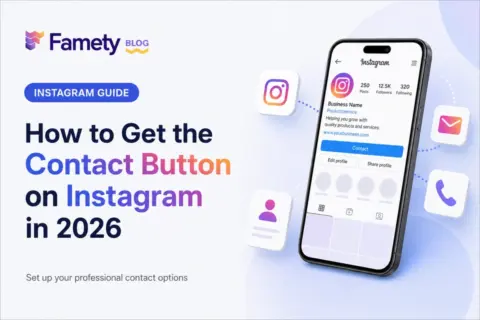
The Contact button sits under your bio next to Follow and Message. When someone taps it, Instagram opens their email app, phone dialer, WhatsApp or Maps, so they can reach you without waiting for a DM reply. Personal accounts cannot show it, but Business and Creator accounts both can, and you do not need to be verified.
- From your profile, tap Edit profile.
- Under Public business information, tap Contact options.
- Add at least one method: email address, business phone number, business address or WhatsApp Business number.
- Go back one screen and turn on Display contact info on profile.
- Save your profile and check the public view. The button usually appears within a minute.
If you add more than one method, Instagram shows a single Contact button and lets visitors choose how they want to reach you. A few details are worth knowing:
- Email: use an inbox you check regularly, because Meta also sends business notifications there.
- Phone: include your country code. In some regions Instagram verifies the number by SMS before it goes live.
- Address: opens Maps at your location, which is useful for local businesses that serve customers in person.
- WhatsApp: the number must be registered in the WhatsApp Business app.
Contact Button Not Showing? 5 Quick Fixes
- Confirm your account type is still Business or Creator, not Personal.
- Check that Display contact info is turned on. It can reset when you switch account types.
- Make sure the email or phone number you added is verified.
- Force close the Instagram app and reopen it, because bio changes can take a minute to appear.
- Log out and back in. If the button is still missing, your account may be under a short review, and it usually returns on its own.
To change or remove the button, go back to Edit profile, then Contact options, and edit or delete any method. Removing every method hides the button. To keep your details saved but hidden, turn Display contact info off instead.
Step 5: Connect to Your Facebook Business Page (Optional but Smart)
Doing this gives you access to Meta’s ad tools, lets you schedule posts via Business Suite and helps with unified messaging.
How to Turn Off a Business Account on Instagram
If a Business account does not suit you, you can switch back at any time:
- Go to your profile and tap the three lines in the top right corner.
- Open Settings and activity, then Account type and tools.
- Tap Switch account type, then Switch to personal account.
- Confirm by tapping Switch to personal.
Your posts, followers and messages stay the same. You lose Insights data, contact buttons, scheduled posts and the ability to run ads. If you only want a wider music library or creator tools, switch to a Creator account instead of a personal one.
Step 6: Optimize Your Profile
Here’s where many businesses fall short. Don’t just “fill in the blanks”; optimize strategically:
- Profile photo: Use a recognizable logo or brand mark
- Username & Name: Make them searchable and consistent with other platforms
- Bio: Include your value proposition + a call to action
- Link in Bio: Either your website or a multilink tool (like Linktree or Later)
- Story Highlights: Group key content (FAQs, Reviews, Products etc.)
What to Post on Instagram for Business? [Content Ideas + Examples]
You’ve set up your Instagram Business account. Now comes the million dollar question: what should you post?
Posting randomly is a recipe for inconsistency and low engagement. To succeed, you need a mix of content types that align with your brand, attract attention, and drive action.
1. Educational Content
Teach your audience something they care about. This builds authority and trust.
- Tips & Tricks: “3 Ways to Use Instagram Stories for Product Launches”
- Myth Busting: “No, You Don’t Need 10K Followers to Sell on Instagram”
- Step by step Guides: Use carousels to explain how your product or service works
2. Behind the Scenes
People love to see what happens behind the curtain. Show your:
- Daily operations
- Team in action
- Product creation process
This helps humanize your business, which matters most for small businesses.
3. User Generated Content (UGC)
Encourage happy customers to share their experiences and repost them (with permission). It’s social proof and marketing in one.
- Reposts of customer reviews
- Unboxing videos
- Before/after photos
4. Product/Service Showcases
Make it creative and avoid hard selling in every post.
- Use natural lifestyle shots instead of studio images
- Add product tags so followers can tap through to the product
- Create 15 to 30 second Reels with upbeat music and CTAs
5. Engaging Interactive Content
Instagram’s built in tools can help spark conversation and increase engagement.
- Polls, quizzes and question stickers in Stories
- “This or That” choices related to your brand
- Ask your audience to vote or comment
6. Repurpose Long Form Content
Turn blog posts, YouTube videos or webinars into bite sized Instagram content:
- Infographic style carousels
- Quick video summaries
- Quotes or takeaways as Reels
Example Content Calendar (Week View):
| Day | Content Type | Post Idea |
| Monday | Educational Carousel | “How to use Instagram for small business in 3 steps” |
| Tuesday | Product Reel | “Watch this 20 seconds demo of our new feature” |
| Wednesday | Behind the Scenes Story | “Packing orders at our HQ, come with us!” |
| Thursday | UGC Repost | “Thanks @jane_doe for this amazing photo!” |
| Friday | Poll in Stories | “What’s your biggest Instagram challenge?” |
| Saturday | Quick Tip Post | “How to write better captions in 10 seconds” |
| Sunday | Relaxed/Brand Personality | “Team dog photos because… why not?” |
How to Sell on Instagram Without a Website
You do not need a website to start selling on Instagram. Instagram’s built-in Shop features usually require a website domain you own, but many small businesses sell successfully without one:
- Switch to a Business account so customers see contact buttons and your business category.
- Write a clear bio that says what you sell, where you ship and how to order.
- Use your link in bio for a payment page, a marketplace listing or a simple order form.
- Show products with prices in posts and Reels, and keep a “Shop” Highlight that works like a catalog.
- Take orders in DMs. Set up saved replies for common questions about price, sizes and shipping.
- Build trust with reviews, unboxing videos and real customer photos.
When your sales grow, a simple website lets you add product tags and the full Instagram Shop.
Tools and Tactics to Grow Your Business Account
Schedule Posts in Advance
Business and Creator accounts can schedule posts and Reels directly in the Instagram app. Create your post as usual, open the advanced or more options menu, turn on “Schedule this post” and pick a date and time. You can schedule up to 75 days ahead. If you manage several accounts or also post to Facebook, Meta Business Suite lets you plan everything from a desktop calendar. To pick the right slots, see our breakdown of the best times to post.
Run Giveaways That Attract the Right Followers
A giveaway works when the prize is something only your target customers want. Your own product or a gift card for your store attracts people who might buy later; a generic prize attracts people who unfollow after the draw. Keep the rules short (follow, like, tag one friend), state the end date and who can enter, and include the notice Instagram requires: that the giveaway is not sponsored or endorsed by Instagram.
Engagement Groups: Use Them With Caution
Engagement groups, also called pods, are groups of accounts that agree to like and comment on each other’s posts. They can give a new post an early push, but Instagram treats coordinated engagement as inauthentic behavior and may limit the reach of accounts that rely on it. The comments also come from people outside your audience, so they rarely turn into customers. If you join one, keep it small and limited to accounts in your own niche.
How to Use Instagram Stories and Reels for Maximum Business Growth
Instagram Stories and Reels aren’t just trendy features; they’re growth accelerators for businesses that know how to use them. Building a loyal base of Instagram followers through Stories and Reels can drive lasting engagement and create real customer relationships without spending a dime.
Here’s how to make these formats work for your business.
Reels are Instagram’s answer to TikTok, and the algorithm heavily favors them. They’re shown to users beyond your followers, which makes them perfect for discovery and growth.
What works well in Reels:
- Quick tutorials: Show how to use your product or solve a problem
- Before and after transformations
- Customer testimonials (edited into short, engaging clips)
- Trends with a brand twist: Use popular audio and adapt it to your niche. Business accounts have a smaller music library, so check why some songs are missing on Instagram before you plan a trend
Stories are temporary, casual and personal, which makes them perfect for creating direct relationships with your audience.
They disappear in 24 hours, but they’re highly engaging because they sit right at the top of the Instagram feed.
Use Stories to:
- Share limited time promotions or product drops
- Answer FAQs using the question sticker
- Show behind the scenes operations
- Run polls, quizzes, or “Ask Me Anything” sessions
- Add link stickers to drive traffic to your blog or shop
| Feature | Reels | Stories |
| Visibility | Shown to non followers | Shown to followers only |
| Lifespan | Permanent (unless deleted) | 24 hours (unless saved to Highlights) |
| Purpose | Reach new audiences | Build loyalty + drive action |
| Style | Edited, entertaining | Raw, personal |
Story Ideas That Get Replies
Stories work best when they ask viewers to do something. Instagram’s interactive stickers make that easy:
- Poll: let followers vote between two products, colors or ideas.
- Quiz: test what people know about your industry and reveal the answer in the next Story.
- Questions: collect questions for a Q&A session or a future post.
- Emoji slider: ask how excited people are about a launch.
- Countdown: build up to a sale, event or product drop. Followers can set a reminder.
- Link: send viewers to a product page, booking form or blog post.
A few business Story ideas you can repeat every week:
- A behind-the-scenes look at how a product is made or packed
- A customer review or photo shared with permission
- A “this or that” poll between two products
- A quick tip related to your product
- A weekly Q&A answered over several Stories, or a short Instagram Live for bigger questions
- A sneak peek of something that launches soon
Save your best Stories to Highlights such as “Reviews,” “FAQ” and “New In” so new visitors can find them on your profile. More Story views on these Stories also means more people see your offers.
Frequently Asked Questions
Is an Instagram business account free?
Yes. Switching to a Business or Creator account is free and gives you Insights, contact buttons and the option to run ads. You only pay if you choose to promote posts or run ads through Meta.
How often should a business post on Instagram?
Consistency matters more than volume. A realistic starting point for most small businesses is three to five feed posts or Reels a week and Stories on most days. Check Insights after a month and keep the formats that bring reach, saves and profile visits.
How do I use Instagram Reels for business?
Use Reels to reach people who do not follow you yet. Short tutorials, before-and-after clips, behind-the-scenes moments and answers to customer questions work well. Hook viewers in the first two seconds, add captions because many people watch without sound, and end with one clear action, such as visiting your profile or sending a DM.
Do I need a Facebook Page for an Instagram business account?
No. A Facebook Page is optional. Connecting one helps if you want to manage ads, messages and scheduling in Meta Business Suite, but you can run a business account without it.
How many hashtags should a business use on Instagram?
Instagram allows up to 5 hashtags per post or Reel. Use one broad tag for your industry and fill the rest with niche, location or branded tags. Our list of the top Instagram hashtags is a good place to find ideas.
Can I add a contact button on a personal Instagram account?
No. The Contact button is only available on professional accounts. Switching to a Business or Creator account is free, takes less than a minute and can be reversed at any time.
What is the difference between the Message and Contact buttons?
Message opens an Instagram DM and is available on every account. Contact opens the method you added, such as email, phone, WhatsApp or Maps, and only appears on Business and Creator accounts.
First Impressions on Instagram Start with Your Follower Count
Before a potential customer reads a single caption, they check the numbers. Famety helps you attract more Instagram followers so your business profile looks established from the moment anyone lands on it.