Letting members pick their own roles is one of the highest-return setup decisions a Discord server owner can make. Self-assigned roles filter conversations by interest, unlock category-specific channels, gate rules and NSFW areas correctly, and quietly onboard new members without requiring admin intervention. A well-configured role system is the difference between a chaotic server and a community that scales.
This guide covers exactly how to let members choose roles in Discord in 2026: the built-in Onboarding flow, reaction roles with bots, buttons and slash commands, permission structure, and the mistakes that most first-time server owners make. It also connects the technical setup to the harder question of where those members come from in the first place, because a beautifully configured server without members is just a beautifully configured empty room.
Why Let Members Choose Their Own Roles?
Manually assigning roles works only for very small servers where the owner knows every member personally. Once you cross about 50 members, it becomes impossible to keep up. Self-assigned roles solve several problems at once:
- Members personalise their experience by opting into topic-specific channels.
- Age-gated content (18+ channels) is handled correctly with age verification roles.
- Regional or language communities within a server can find each other.
- Notification preferences can be tied to roles: members only get pinged for topics they care about.
- Onboarding is faster: new members reach relevant channels without needing an admin.
Method 1: Discord’s Built-In Onboarding and Server Guide
Discord’s native Onboarding feature (introduced in 2023 and expanded through 2025 and 2026) is the officially supported way to let members choose roles. It requires the Community feature to be enabled on your server.
Prerequisites
- Community feature enabled (Server Settings → Community → Enable Community).
- Rules Channel and Community Updates Channel set.
- At least the default verification level configured.
Setting Up Onboarding with Role Options
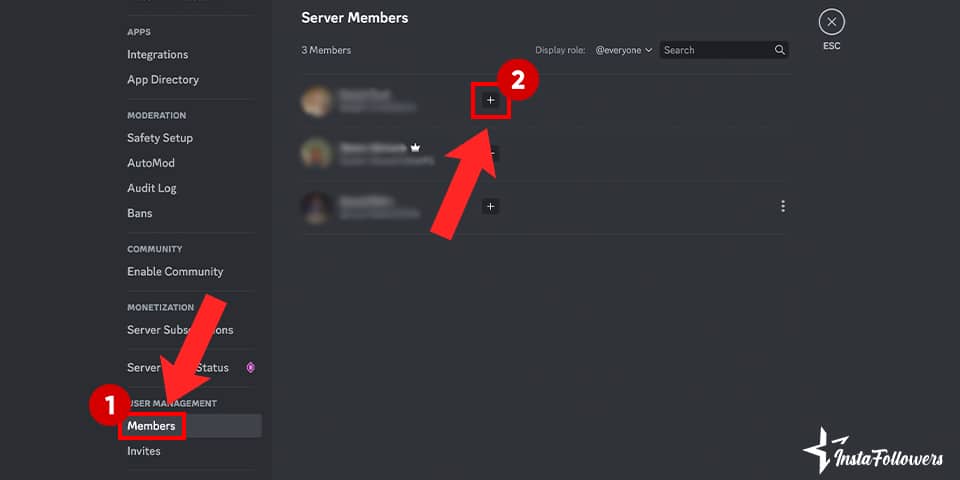
- Open Server Settings → Onboarding.
- Click Get Started or Set Up Onboarding.
- Choose the default channels new members can see.
- In the Customise Onboarding step, create prompts. A prompt is a question new members answer during onboarding.
- For each prompt, add answer options. Each option can be linked to a role and to specific channels.
- Example: prompt “What are you here for?” with options “Gaming (assigns Gamer role),” “Art (assigns Artist role),” “Just chatting (assigns Chatter role).” Each role unlocks the corresponding channels.
- Save the onboarding flow. New members go through it automatically when they join.



Existing members do not go through onboarding automatically. To let them access the role selection, direct them to the Channels and Roles panel (visible at the top of the server channel list) where they can update their role selections at any time.
Method 2: Reaction Roles with Bots
Reaction roles are the traditional way to let members choose roles, and they still work well for servers that want more custom setups than Onboarding provides. A reaction roles bot posts a message with emoji reactions, and clicking an emoji assigns the corresponding role.
Popular Reaction Role Bots in 2026
| Bot | Notable Features | Free Tier |
|---|---|---|
| Carl-bot | Reaction roles, buttons, dropdowns, automod, logs | Yes (full features) |
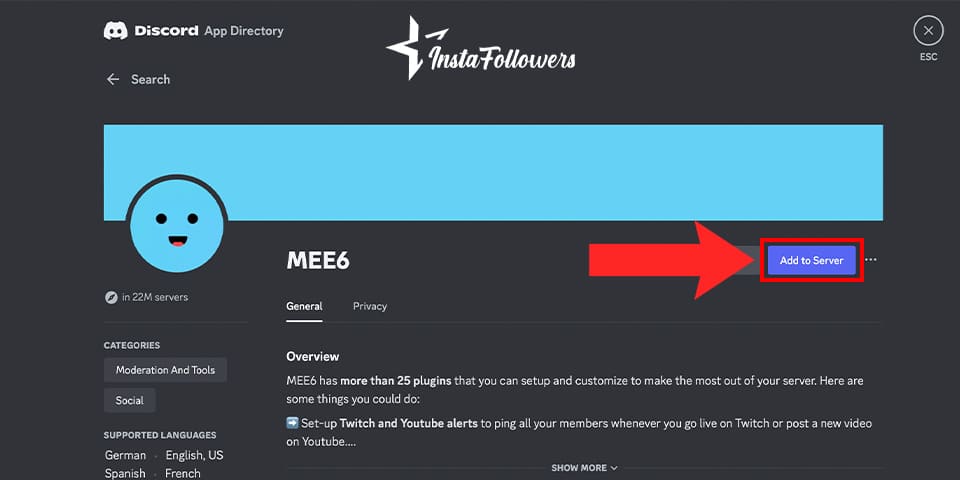
| MEE6 | Reaction roles, levels, moderation, welcome messages | Yes (limited) |
| YAGPDB | Reaction roles, custom commands, moderation | Yes (open source) |
| Dyno | Reaction roles, auto-mod, custom commands | Yes (with premium tier) |
| Reaction Roles | Dedicated reaction role bot, minimal footprint | Yes |
Setting Up Reaction Roles with Carl-bot (Example)
- Invite Carl-bot to your server through carl.gg/invite.
- Grant the bot the Manage Roles permission and make sure its role is above the roles it will assign in the role hierarchy.
- Go to Carl-bot’s dashboard at carl.gg and select your server.
- Open the Reaction Roles section.
- Create a new reaction role message: choose a channel, write the message text, and add role-emoji pairs.
- Save and post the message. Members click the emoji reactions to assign or remove roles from themselves.
The role hierarchy point is important: Discord permissions work top-down. A bot can only assign or remove roles that are below its own role in the server’s role list. If your reaction roles are not working, check that the bot’s role is positioned above the assignable roles.
Method 3: Button Roles and Dropdown Menus
Buttons and dropdown menus are the modern alternative to reaction roles. They are cleaner-looking, easier to use on mobile, and less prone to accidental clicks. Carl-bot, MEE6, Dyno, and several dedicated bots support both.
Setting Up Button Roles
- Choose a bot that supports button roles (Carl-bot, MEE6, or similar).
- Use the bot’s dashboard or in-server slash command to create a button role message.
- Define the message content, then add each role button (label, colour, and the role it assigns).
- Post the message. Members click buttons instead of emoji reactions.
Setting Up Dropdown Menus
Dropdown menus are best when you have many role options that would otherwise fill the screen with buttons. Instead of 15 buttons, you show one dropdown with 15 options inside it. This is common for language selection, timezone assignment, or interest categorisation.
- Create a new role message using your bot’s dashboard.
- Choose the dropdown menu format instead of buttons.
- Add each option with its label, description, and linked role.
- Set whether members can pick one option or multiple options.
- Post the message. Members open the dropdown to make their selection.
Role Structure Best Practices
A well-organised role structure prevents confusion and permissions problems as your server grows. Guidelines that consistently work:
- Group roles by purpose: interest roles (Gamer, Artist), access roles (18+, VIP), notification roles (Announcements, Events).
- Use distinct role colours for role types so members can visually parse the role list.
- Keep the role hierarchy clean: staff and moderator roles above bots, bots above self-assigned roles.
- Avoid overlapping permissions: assign channel access at the role level, not per member.
- Document your role structure in a pinned message or a dedicated role-info channel.
- Regularly audit unused roles and remove them to keep the list manageable.
Common Mistakes to Avoid
- Placing bot roles below the roles they need to assign (they cannot assign roles above their own).
- Creating too many roles at once: 5 to 10 useful roles are better than 30 confusing ones.
- Not pruning outdated roles from past events or campaigns.
- Giving self-assigned roles moderation permissions by accident.
- Forgetting to test the role assignment flow yourself before announcing it.
- Setting up reaction roles in a channel that most members cannot see.
How to Recruit Discord Members from Social Media
A perfectly configured server is only useful if people actually join it. Discord’s built-in discovery surfaces very few servers to new users, so most Discord communities grow through off-platform promotion. The channels that consistently deliver new members in 2026:
TikTok Clips of Server Culture
Short clips (30 to 60 seconds) that capture funny moments, useful conversations, or events happening inside your server give TikTok viewers a reason to click your Discord invite in the bio. Servers built around gaming, art, and niche interests grow especially well through TikTok clips because the content is inherently visual and shareable.
Instagram Cross-Promotion
An Instagram profile with a Discord invite in the bio, occasional posts about upcoming server events, and Stories that announce inside-jokes or community moments drives steady member acquisition. Instagram’s value here is retention: it keeps existing members engaged between visits and gives them a reason to invite friends.
Reddit Community Posts
Many active niches have subreddits that either allow Discord server promotion or have dedicated weekly self-promotion threads. A well-written post explaining what makes your server unique tends to bring in new members over time. Focus on genuine value in the post rather than a pure sales pitch.
Discord Server Directories
Listing your server on Disboard, Discord.me, and Discadia increases visibility to users actively browsing for new servers. Servers with consistent bumps (posts on Disboard every two hours), good tags, and engaging descriptions rank higher in these directories and pull steady traffic.
Grow Your Discord Server with Social Media
Members find your server through the social media presence you build outside Discord. Accounts with stronger social followings launch and grow Discord servers faster because more people see the invite, more people click it, and the initial membership creates the social proof that attracts subsequent joiners.
Famety helps creators and server owners grow their Instagram followers and TikTok followers to build the off-platform audience that fills a Discord server with real members. More followers on social means more people seeing your server announcements, more clicks on your invite links, and a starting membership base that turns discovery into a self-sustaining growth loop.
Frequently Asked Questions About Discord Roles
How do I let members choose roles in Discord?
Enable the Community feature and set up Discord’s built-in Onboarding flow, or use a bot like Carl-bot, MEE6, or Dyno to create reaction role or button role messages. Members either answer prompts during onboarding or click reactions or buttons to assign themselves roles.
How do I add reaction roles in Discord?
Creating polls in Discord is one of the best ways to engage your community and gather feedback quickly. Whether you’re asking about game nights, team ...
Discord has become one of the largest community platforms on the internet, with over 19 million active servers at any given time and hundreds of milli...
Invite a reaction roles bot to your server (Carl-bot, MEE6, YAGPDB), give it Manage Roles permission, and use its dashboard to create a reaction role message. Members click the emoji reactions on the message to assign themselves the linked role.
What is the best reaction roles bot for Discord?
Carl-bot is the most feature-complete free option, with reaction roles, buttons, dropdowns, and automod all included. MEE6 is popular for its all-in-one feature set, though many features require premium. YAGPDB is a strong open-source alternative for advanced users.
Why aren’t my reaction roles working?
The most common cause is role hierarchy: Discord bots can only assign roles below their own position in the role list. Move the bot’s role above the assignable roles in Server Settings → Roles. Also check that the bot has the Manage Roles permission and that the channel where reactions are posted is visible to the members you expect to use it.
How do I set up Discord Onboarding?
Enable the Community feature in Server Settings, go to the Onboarding section, and click Get Started. Add prompts (questions new members answer) with answer options that assign roles and unlock channels. Save the flow, and new members automatically go through it when joining.
Can I let members choose multiple roles?
Yes. When configuring your onboarding prompts or reaction role messages, allow members to select multiple options rather than restricting them to a single choice. In Discord Onboarding, this is a checkbox in the prompt settings. In bot reaction roles, this is the default behaviour.